WaterWise for Water Conservation
WaterWise Landscaping
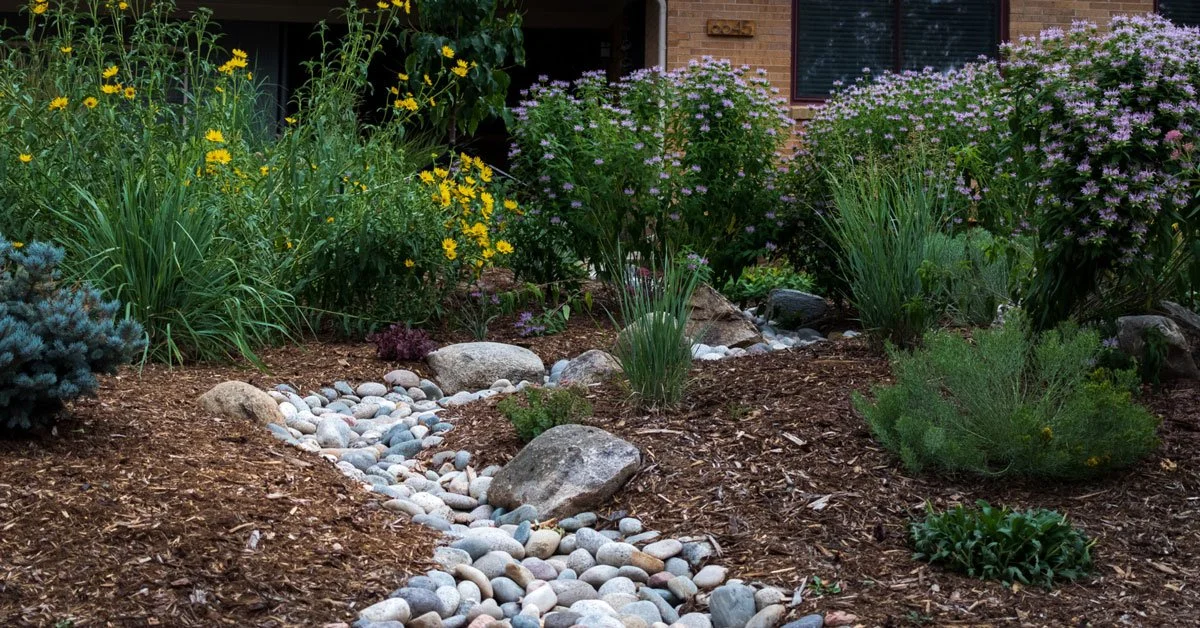
Water-wise landscaping, also known as xeriscaping, is a thoughtful approach to creating outdoor spaces that are functional, attractive, and easy to maintain within their natural surroundings. By prioritizing the use of drought-tolerant plants, efficient irrigation systems, and moisture-retaining techniques like mulching, water-wise landscapes not only blend seamlessly with their environment but also significantly conserve water.
-
Xeriscaping is the practice of designing landscapes to reduce or eliminate the need for irrigation. This means that any plants planted need little or no water beyond what the climate provides.
Xeriscaping is becoming more popular in dry climates due to prolonged drought causing water to become a more limited resource.
The key aspect of xeriscaping is using vegetation that is appropriate for the climate it is planted in. This often means replacing grassy lawns with soil, rocks, mulch, and drought tolerant native plant species.
-
Xeriscaping emphasizes using native, drought adapted plants to reduce water usage. Examples of plant species that can be used in the Grand Valley include:
Rabbitbrush
Sagebrush
Lavender
Indian ricegrass
Walking stick cholla
Single leaf ash
-
Rain water collection is the process of collecting, storing, and directing rainwater runoff and using it. Water is directed from roof gutter downspouts usually used for landscaped areas and is then consumed by plants. Typically, rooftop rainwater collection systems are simple, consisting of gutters, downspouts, and storage containers. Inexpensive rainwater storage systems commonly make use of an above ground container such as a barrel or plastic tank with a lid to reduce evaporation and bar access for mosquitos to breed.
In order to safeguard senior holders of Colorado water rights, diverting and storing water is allowed only during times when all water rights in the basin are satisfied.
There are several restrictions that are important to follow in order to use rain barrels in Colorado. Under House Bill 16-1005, rain barrels can only be installed at single-family households and multi-family households with four (4) or fewer units. A maximum of two (2) rain barrels can be used at each household and the combined storage of the 2 rain barrels cannot exceed 110 gallons. Rain barrels can only be used to capture rainwater from rooftop downspouts and the captured rainwater must be used on the same property from which the rainwater was captured, for only outdoor purposes, including to water outdoor lawns, plants and/or gardens. Rain barrel water cannot be used for drinking or other indoor water uses.
-
WaterWise in the Home
With a lack of water availability from high drought status spanning most of Western Colorado, it is vital to use water as efficiently as possible to best conserve this valuable resource.
Water touches nearly every part of our lives. Water is used for municipal purposes, crops & livestock, transportation, drinking water, food production, fire management, cooking, gardening, cleaning, sewage management, wildlife, aquaculture, bathing, health, recreation, industry, energy production, and much more. Because water is used in so many contexts, conserving it when possible is important to ensure that there is enough water available for all needs. We can do our part in our homes to use water efficiently and conserve when possible.
Tips to conserve water
Limit shower time
Showers use less water than baths
Turn off running water while washing dishes or brushing teeth
Fix leaks as soon as possible
Watering your gardens or lawn early (5am-10am) to beat evaporation
Do full loads in washing machines and dishwashers
Compost food waste instead of using the garbage disposal
Collect warming-up water from the shower in a bucket for the garden
Install a water efficient showerhead - it could save over 10,000 litres a year