Eligible Noxious Weeds and Treatment Options
Mesa County Noxious Weed List
List A
-
Yellowish-green flowers; many branched stems covered with numerous narrow leaves; leaves and stems have milky sap.
Creeping perennial.
Mechanical treatments are recommended when managing small infestations. Wear rubber gloves, eye protection, and long-sleeved shirts during treatments to protect from sap.
2,4-D + Dicamba.
Springtime applications and fall regrowth
Click here for photos and more information about Cypress Spurge
-
Tiny yellow flowers arranged in clusters at the top of multi-branched stems, Leaves in the basal rosette are bluish-green, stalked, and lightly covered in fine hairs
Hand pulling or digging are effective control methods if population is still small, but be certain to pull tap root
Metsulfuron (Escort)
Chlorsulfuron* (Telar)
Apply at the rosette to early bolt growth stage. (Late winter to early spring)
Click here for photos and more information about Dyer’s woad
-
Bamboo-like grass; can grow over 20 ft tall; leaves have heart-shaped bases & grasp the stem; seed heads can reach 3 ft in length. Commonly referred/sold to as bamboo.
Perennial grass
A combination of mechanical removal and chemical applications to stems after removal (cut stump treatment). Many treatments are required.
Glyphosate (Roundup),
Imazapyr (Habitat, Polaris)
Click here for photos and more information about Giant reed grass
-
Hollow stems; stem nodes are raised with a membranous sheath; leaves are heart-shaped; flowers are showy and form in clusters.
Creeping perennial
Only herbicide is recommended for treatments
Glyphosate (Rodeo AquaMaster),
Triclopyr (Garlon 3A for aquatic sites)
Imazapyr (Habitat or Arsenal for aquatic) Imazapyr products are not recommended for use in ornamental or turf environments.
-
Low-growing plant with blue-green waxy leaves; flowers are yellow-green, petal like bracts that appear from March to May; leaves and stems have milky sap
Tap-rooted perennial
Mechanical treatments are effective. Expect to treat seed base germination for 3-5 years after initial treatments
2,4-D + Dicamba.
Springtime applications or fall regrowth
Click here for photos and more information about Myrtle spurge
-
A single plant can produce up to 3 million seeds per year. Rose-purple flowers bloom inlong vertical racemens; lance-shaped leaves with smooth edges
Perennial
Removal of seeds and flowers via cutting and bagging. Treat with foliar, aquatic-approved herbicides.
Glyphosate (Roundup Custom)
Imazapyr (Habitat, Polaris)
Triclopyr (Garlon 3A)
July-September applications
Look alikes: Fireweed
Click here for photos and more information about Purple loosestrife
-
Yellow ray & disk flowers; winged stems; stiff spines at flower base; unique blue-green color, Vary in size significantly
Annual
Mechanical treatments are recommended like hand pulling. Bag specimens carefully to not scatter seeds.
Target rosettes or bolting growth stages with herbicides
Aminopyralid (Milestone),
Clopyralid (Transline), Triclopyr
(Garlon), ,2,4-D, Glyphosate (Roundup)
Click here for photos and more information about Yellow starthistle
-
Pink & white flowers in an umbel form; leaves in triangular cross-section; flowering stems are round; bulbils form on flowers & rhizomes
Creeping perennial
Small infestations can be dug out by hand but follow up treatments for several years will likely be required.
Aquatic Imazapyr (Habitat, Ecomazapyr 2 SL)
Aquatic Glyphosate (Roundup Custom)
Click here for photos and more information about Flowering Rush
-
Yellow iris flowers; broad, blue-green leaves that are pointed at the tips; base of the plant appears flattened in cross-section
Herbaceous perennial
Removal of seeds and flowers via cutting and bagging. Treat with foliar, aquatic-approved herbicides
Glyphosate (Roundup Custom, AquaNeat),
Imazapyr (Habitat, Polaris)
Late Spring to early Summer applications
Click here for photos and more information about Yellow Flag Iris
-
Well-branched; 3 ft tall and 2 ft across; silver-grey leaves & small yellow flowers; strong sage odor
Perennial
Mechanical treatments of hand pulling are effective at any point of the year
Aminopyralid (Milestone)
Clopyralid (Transline)
Aminopyralid + 2,4-D (Forefront HL)
Chlorsulfuron (Telar XP)
Applications made during the Fall are most effective. Many ornamental plants in the valley are wormwoods and are extremely difficult to tell apart.
Click here for photos and more information about Absinth wormwood
-
Solitary flowers with four yellow sepals; herbaceous to woody vine
Climbing Perennial
Mechanical treatments are effective at any time of the year. Take care not to scatter seeds.
2,4-D amine
Imazapic (Plateau Panoramic)
Aminopyralid (Milestone)
Aquatic glyphosate (Roundup Custom)
Applications made before flowering or after seeding are effective
Click here for photos and more information about Chinese clematis
-
Yellow snapdragon-like flowers with an orange throat on elongated racemens; thick, waxy, bluish, heart-shaped leaves that wrap the stem
Perennial
Mechanical is effective but may require many years of retreatments
Chlorsulfuron (Telar XP),
Aminocyclopyrachlor + chlorsulfuron (Perspective)
Applications just before flowering or Fall.
Make sure to use max rates of surfactant (very waxy leaves)
Click here for photos and more information about Dalmation toadflax
-
Four petals, four sepals, four tall & two stamens; alternate lanceolate leaves; hairy stems and leaves; silique with single row of seeds; fibrous lateral roots
Biennial
Mowing is not effective; hand pulling is recommended in the Spring
Chlorsulfuron (Telar XP)
Metsulfuron (Escort XP)
Imazapic (Plateau), 2,4-D
Look alikes: Phlox (5 petals)
Click here for photos and more information about Dame’s rocket
-
Floral bracts have yellow spines with teeth appearing as a comb; distinct terminal spinte; flowers are white or lavender; seedling have finely divided leaves
Biennial
Mechanical treatments are effective hand pulling is most effective
Aminopyralid (Milestone),
Clopyralid (Transline),
Chlorsulfuron (Telar XP)
Click here for photos and more information about Diffuse knapweed
-
Flowers are yellowish-green & have a pair of heart shaped yellow-green bracts below each inconspicuous flower; entire plant contains white, milky latex
Creeping perennial
Aminocyclopyrachlor + Chlorsulfuron (Perspective)
Quinclorac (Paramount, Quinstar) Diflefenzopyr + Dicamba (Overdrive, District)
Imazapic (Plateau, Panoramic)
Extremely difficult to control
Click here for photos and more information about Leafy spurge
-
Flower heads cluster 2-5 & are purple to dark red; leaves are alternate, stalk-less and hairy underneath
Biennial
Mechanical treatments are considered effective before flowering
Aminopyralid (Milestone),
Chlorsulfuron (Telar XP),
Clopyralid (Transline),
Clopyralid + 2,4-D (Curtail)
Click here for photos and more information about Plumeless thistle
-
Flower heads cluster 2-5 & are purple to dark red; leaves are alternate, stalk-less and hairy underneath
Biennial
Mechanical treatments are considered effective before flowering
Aminopyralid (Milestone),
Chlorsulfuron (Telar XP),
Clopyralid (Transline),
Clopyralid + 2,4-D (Curtail)
Click here for photos and more information about Spotted knapweed
-
Hirsuit calyx with perpendicular hairs; leaf underside is green; hirsuit stem, petioles & leaves with perpendicular hairs; caudex & woody taproot with annual rings
Perennial
Mechanical treatments are not recommended
Aminopyralid (Milestone),
Metsulfuron (Escort XP),
Glyphosate (Roundup)
Click here for photos and more information about Sulfur cinquefoil
-
Yellow snapdragon-like flowers with deep orange centers; stems are woody at the base and smooth at the top, leaves are narrow, linear 1-2 in long
Mechanical and grazing are not recommended (toxic to grazers)
Aminopyralid (Milestone), 2,4-D
Aminocyclopyrachlor + Chlorsulfuron (Perspective)
Telar XP (Chlorsulfuron)
Applications in Spring or Fall
Click here for photos and more information about Yellow toadflax
List B
-
Bull thistle: Flowers arranged in a raceme; flower is gum-drop shaped; base of leaves clasp the stem & extend down the stem to node below; top surface of leaves have stiff, rough hairs
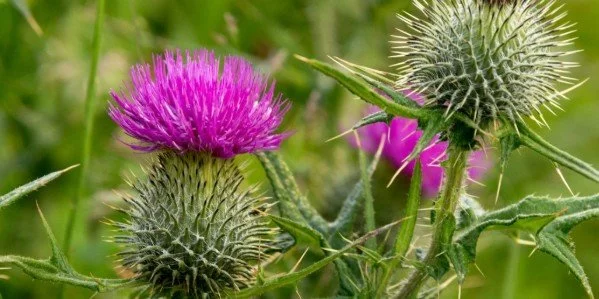
Scotch thistle: Pitted fleshy flower receptacle; prominent mid-rib; wide lobed leaves; wide spiny wings extend the length of the stem
Musk thistle: Leaf with white midrib & leaf margins with spines; pappus with plumose barbed bristles; wide, stout lance-shaped bracts with spiny tips
Biennial
Aminopyralid (Milestone)
Chlorsulfuron (Telar XP)
Clopyralid (Transline)
2,4-D
Glyphosate
Easily establishes in disturbed areas. Treat rosette or when bolting.
Late applications can cause thistles to produce seeds more quickly before herbicide can take effect.
Click here for photos and more information about Bull thistle
Click here for photos and more information about Scotch thistle
Click here for photos and more information about Musk thistle
-
Leaves are oblong, spiny, bright green, and slightly hairy on the undersurface. Unlike other noxious biennial thistles, Canada thistle flowers occur in small clusters of 1 to 5 flowers. They are about 1 cm in diameter, tubular shaped, and vary from white to purple in color.
Deep-rooted perennial
Due to extensive root system, hand-pulling and tilling create root fragments and stimulate growth, mowing can be effective if done every 10 to 21 days throughout growing season
Aminopyralid (Milestone)
Clopyralid + Triclopyr (Prescott; Redeem; others)
Aminocyclopyrachlor + chlorsulfuron (Perspective)
Click here for photos and more information about Canada thistle
-
Stem leaves are alternate and oblong. Leaves are deeply divided, with four to ten pairs of leaflets, with button-like, perfect disc flowers
Perennial
Remove all root biomass or sever roots below the soil surface early in the season
Mowing, chopping, hand-pulling, and deadheading leaves roots behind and can disperse seeds, expanding the infested area.
Aminocyclopyrachlor + chlorsulfuron (Perspective)
Aminopyradlid + Metsulfuron (Opensight)
Metsulfuron (Escort XP)
Apply Late spring to mid-summer
Click here for photos and more information about Common tansy
-
Common teasel - produces more than 2,000 seeds per plant. The flowers are purple or white with spiny, awned bracts at the base. The flower head is generally egg-shaped, with a square base
Cutleaf teasel - Flower heads are cream to white and bloom from the center of the head first.The green floral bracts are fused at the base, forming a cup. The bracts on cutleaf teasel are wider and generally shorter than the entire length of the flower head.
Biennial
Mechanical methods are best for infestations smaller than 0.5 acres; Mowing, chopping, and deadheading stimulate more flower production; these methods require consecutive years of season-long treatments.
Flower heads must be collected, bagged, and disposed of or destroyed;
Metsulfuron (Escort XP)
Aminopyralid (Milestone)
Imazapic (Plateau)
Click here for photos and more information about Common teasel
-
The stems, in the rosette stage, may grow up to 2 inches in height and produce lance-shaped grayish-green leaves. The plant has numerous small, white flowers with 4 petals on stalks radiating from a stem.
Creeping perennial
Chlorsulfuron* (Telar)
Metsulfuron (Escort XP)
Imazapic (Plateau, Panoramic)
Click here for photos and more information about Hoary cress/white top
-
Panicles of reddish-purple flowers with 5 petals & 5 soft, hairy sepals; velcro-like seeds with 4 nutlets
Biennial
Hand-pulling or separating root from upper biomass is recommended
Metsulfuron (Escort XP)
Chlorsulfuron (Telar XP) + 2,4-D
Metsulfuron + Chlorsulfuron (Cimarron X-tra)
Apply to rosette before bolting
Click here for photos and more information about Houndstongue
-
Can grow up to 3 feet tall on rigid stems that are openly branched on the upper half of the plant. Urn-shaped flowers are solitary on the tip of each branch. Flowers are pink to purple and rarely white
Perennial forb
Mechanical treatments are considered effective before flowering
Aminopyralid (Milestone)
Chlorsulfuron (Telar XP)
Clopyralid (Transline)
Clopyralid + 2,4-D (Curtail)
Click here for photos and more information about Hybrid knapweed
-
Yellow snapdragon-like flowers with deep orange centers; stems are woody at the base and smooth at the top, leaves are narrow, linear 1-2 in long
Perennial
Mechanical and grazing are not recommended (toxic to grazers)
Aminopyralid (Milestone), 2,4-D
Aminocyclopyrachlor + Chlorsulfuron (Perspective)
Telar XP (Chlorsulfuron)
Applications in Spring or Fall
Click here for photos and more information about Hybrid toadflax
-
Stiff short hairs evenly spaced on the margins of leaf blades; evenly spaced hairs are on auricles, leaf sheath & ligules; spikelets fit in a zigzag pattern in a cylindrical shape
Winter annual
Mechanical treatments are not recommended
Glyphosate (Roundup)
Imazapic Glyphosate (Journey)
Imazapic (Plateau, Panoramic)
Aminocyclopyrachlor + Chlorsulfuron (Perspective)
Apply before spikelets begin to form (early Spring)
Pre-emergents must be applied before seed germination (late summer, early fall)
Click here for photos and more information about Jointed Goatgrass
-
15-30 white ray flowers on flowerheads that are 1-2” in diameter; rosette & lower leaves are spoon-shaped & toothed; upper leaves on the stem are narrow, toothed, & clasp the stem
Creeping perennial
Small infestations can be controlled by hand-pulling
Aminopyralid (Milestone),
Melsulfuron (Escort XP),
Chlorsulfuron (Telar XP)
Apply before flowering in the Spring or early Summer
Click here for photos and more information about Oxeye daisy
-
Growing 1 to 5 feet high, pepperweed has tiny white flowers. The flowers have four spoon-shaped petals in dense, rounded clusters on branch tips of erect stems. Stems emerge from deep, thick, woody root stocks that can penetrate 10 feet into the soil.
Perennial forb
Due to the deep, brittle root, most mechanical methods are not recommend
Chlorsulfuron* (Telar)
Metsulfuron (Escort XP)
Imazapic (Plateau, Panoramic)
Apply when plant is in the early flower to flowering growth stages. (Early spring to early summer)
Click here for photos and more information about Perennial pepperweed
-
Russian knapweed can grow up to 3 feet in height. The flowers are urn-shaped, pink to purple in color, and are solitary at the tips of the upper branches. Russian knapweed can be distinguished from other knapweeds by the smooth, papery, rounded bracts that surround the flowers.
Perennial
Mowing several times before the plants bolt stresses Russian knapweed; however, mowing alone will not eliminate the infestation, and it can stimulate shoot sprouting the following year.
Aminopyralid* (Milestone)
Aminocyclopyrachlor + Chlorsulfuron
(Perspective)*Aminopyralid* (Milestone) + Chlorsulfuron** (Telar)
Picloram* (Tordon/Picloram 22K - Restricted use pesticide)
Click here for photos and more information about Russian knapweed
-
Deciduous evergreen shrub or small tree that grows from 5 to 20 feet tall. The bark on saplings and stems is reddish-brown. The leaves are small, scale-like and bluish-green in color. Tiny pink to white flowers have five petals and grow on slender racemes.
Recommend: Cut-Stump Method
Triclopyr (Garlon 4, Remedy)
Glyphosate* (Rodeo - approved aquatic label)
Triclopyr (Garlon 4, Remedy) + Aminopyralid (Milestone)
Click here for photos and more information about Tamarisk/Saltcedar
-
Plants range from 6 to 30 inches tall. Leaves originate from the base of each stem and are grasslike, smooth, glossy, and folded lengthwise. Flowers are yellowish-brown in color and appear from June to October.
Perennial
Hand pull small nutsedge plants when they have less than 6 leaves, which is before tubers form. This is approximately every 2 to 3 weeks during the growing season; over time, this will deplete energy reserves in the roots. Tilling can potentially spread tubers.
Halosulfuron (Sandea 75DF)
Glyphosate* (Roundup)
Sulfentrazone
2 or 3 treatments in June and July over 2-3 years
Click here for photos and more information about Yellow nut-sedge
-
Plant is prostrate, spreading into mat form; stems can grow 1-5 ft long; leaflets containing 5-8 oval leave; leaves hairy and opposite; yellow flowers with 5 petals; seed capsule is hard and contains many spines
Annual, germinates in late June-July
Hand-pulling and bagging is recommended; be sure to reduce spreading of seeds
2,4-D + Dicamba
Chlorsulfuron (Telar XP)
Pendimethalin (Pendulum)
Pre-emergent treatments require precipitation to reach seeds in soil.
Click here for photos and more information about Goatshead/Puncturevine
-
Eurasian watermilfoil is an aquatic plant with feathery underwater foliage. The plant roots on the bottom, but survives and is spread as free-floating plants waiting to take root. The leaves each have 12 to 21 pairs of leaflets and are 1 inch long.
Use of mechanical methods come with a high risk of spreading infestations since Eurasian watermilfoil fragments and roots easily. Such methods should be used only in closed systems, such as ponds, with no outlet, or in limited situations.
2-4-D (Aqua-Kleen, Navigate, DMA 4 IVM; Use only aquatic-approved products)
Fluridone (Sonar or Avast)
Imazamox (Clearcast)
Triclopyr (Renovate 3)
Click here for photos and more information about Eurasian watermilfoil
-
Flowers are yellow to white in color with 5 petals that have purple centers and are 2 to 3 cm in diameter. Stems are erect and stout, reaching 0.61 to 1.5 m tall. Leaves initially develop as a basal rosette. Mature leaves are not hairy, oblong in shape, and have toothed margins. They are also 8 to 45 cm long and 3 to 15 cm wide.
Biennial forb
Mechanical methods can be effective, especially in residential areas and small infestations. The key is to sever roots below the soil surface in the first year or early in the second season before the plant flowers.
Collect, bag, and dispose of all flowers and fruits.
Aminopyralid (Milestone)
Metsulfuron (Escort XP)
Chlorsulfuron* (Telar)
Click here for photos and more information about Moth mullien
-
Receptacle is solid in the center, cone-shaped and naked; phyllaries are oblong, green in center, and dried on margins, alternate leaves are bipinnatifid, fibrous roots
Annual, biennial, & perennial
Mechanical treatments are effective as long as removal is performed before seeding
Metsulfuron (Escort XP),
Chlorsulfuron (Telar XP),
Aminopyralid (Milestone)
Apply to rosette or when bolting
Click here for photos and more information about Scentless chamomile
-
Three lobed ray flowers; pungent odor; narrow cone-shaped receptacle with chaff-few long hairs; imbricate phyllaries with hairs; alternate leave are bi- to tripinnatifid; fibrous taproot
Annual, biennial, & perennial
Mechanical treatments are effective as long as removal is performed before seeding
Metsulfuron (Escort XP),
Chlorsulfuron (Telar XP),
Aminopyralid (Milestone)
Apply to rosette or when bolting
Click here for photos and more information about Mayweed chamomile
-
The tree can reach up to 30 feet with branches with 1 to 2-inch thorns. Leaves are 2 to 3 inches long, alternate, and narrow. Plant has olive-shaped fruits, which are silvery at first, then yellow-red when mature.
Perennial tree or shrub
Recommend: Cut-Stump Method
Garlon 3A (Triclopyr) or Habitat (Imazapyr)
Click here for photos and more information about Russian Olive
-
Wild caraway is a prolific seed producer; under ideal conditions, each plant can produce several thousand seeds. Stem leaves are finely divided, and resemble those of carrots in shape but tend to droop more. Shoot leaves are alternate and normally oblong or oval in shape. Flowers are white or pinkish in color, small, and occur in terminal or lateral loose clusters at the top of stems. Mature plants are 1 to 3 feet tall and have one or more shoots emerging from a single taproot.
Biennial or sometimes perennial forb
Mechanical methods are best for residential areas and small infestations. Sever roots below the soil surface early in the season, before the plant stores energy, and before seed production.
Aminopyralid + Metsulfuron (Opensight)
Metsulfuron (Escort XP) + 2,4-D
2,4-D
Click here for photos and more information about Wild caraway
Pesticide Labels: Before purchasing, read the entire label and determine suitability for the site and the type of weed
product's brand name, active ingredients, and child hazard warning on the front panel
Further details include precautionary statements, first aid instructions, and environmental hazard warnings
directions for use, storage, and disposal instructions.
Personal Protective Equipment (PPE) Always follow the label!
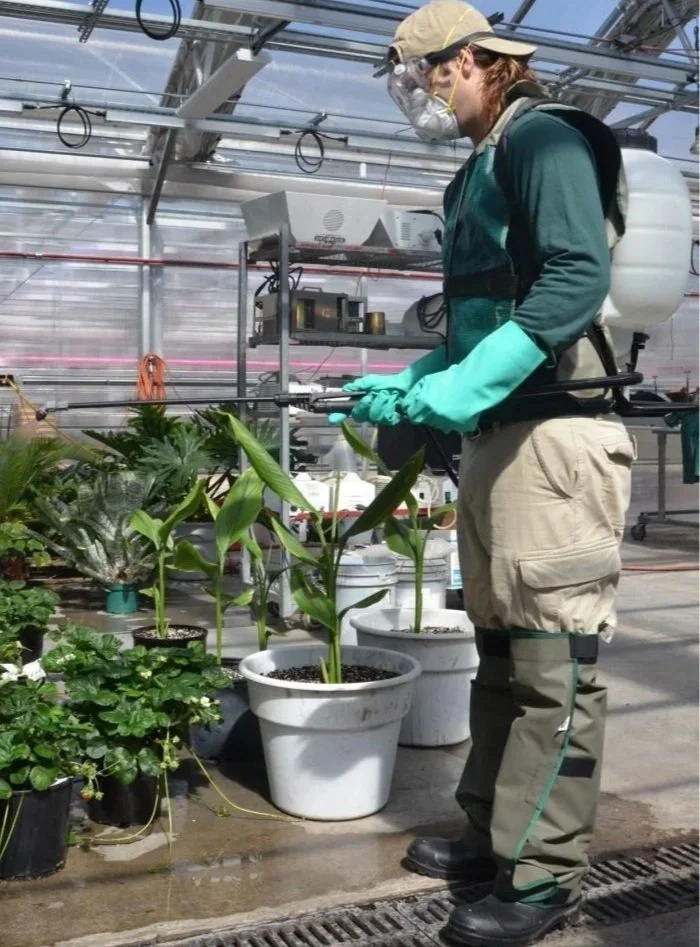
wear chemical-resistant gloves (nitrile), pants, shoes, socks, a long-sleeve shirt, and eye protection during mixing, loading, and applying
Clean your equipment and PPE after each use and do not use PPE or equipment outside of pesticide applications.
Wash contaminated clothes separately from other clothing with hot water, soap/detergent, and a double wash cycle.